AI across biological scales at the QBI-Institut Curie symposium
UCSF’s Quantitative Biosciences Institute and Institut Curie co-hosted a week of symposia on AI across biological scales, bringing together researchers from the US and France working on structural biology, drug discovery, computational pathology, and neurodegeneration.
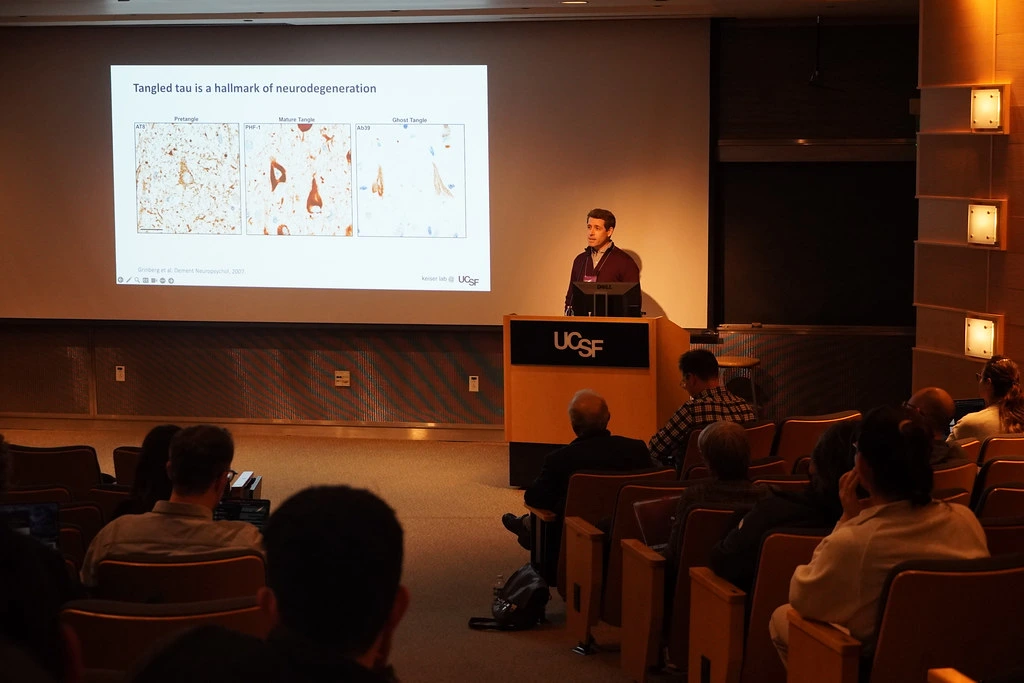
Michael’s talk demonstrated two generative AI approaches: trans-channel learning that recovers hidden biological signal from historical cell screens, and a diffusion model that builds drug-like molecules fragment by fragment inside protein binding pockets. Together they sketch a pipeline from phenotypic screening to molecular design.
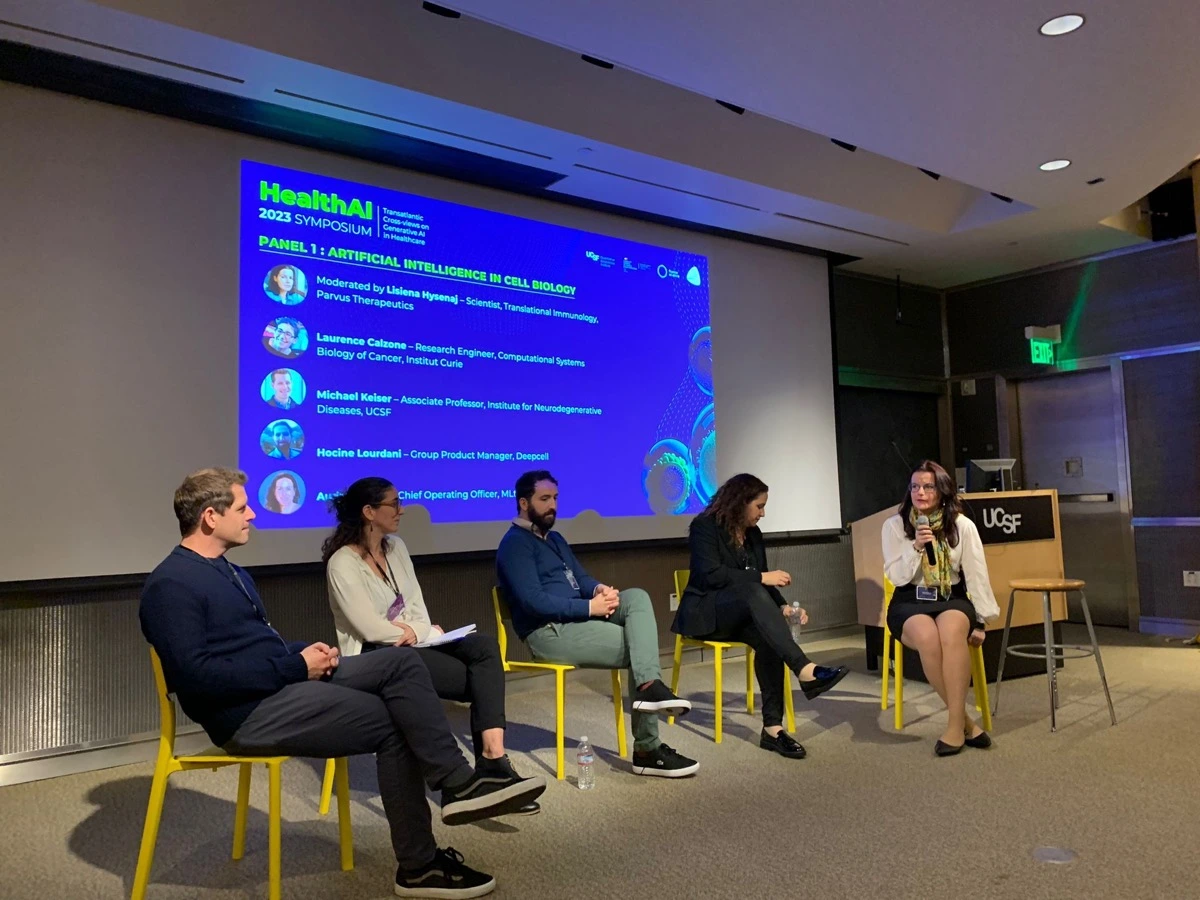
Some highlights from the panel discussion:
- The real AI safety question in drug discovery is organizational, not computational. The models aren’t the bottleneck — institutional oversight and accountability are.
- Not everyone needs to code, but everyone using AI needs to be a critical consumer of its predictions. The most important training is knowing how to test whether a model is telling you something real.
- “For what use?” is the right question for multimodal AI in biology. For some applications we’re already there; for others, we don’t yet have the right markers or data to know what we’re missing.